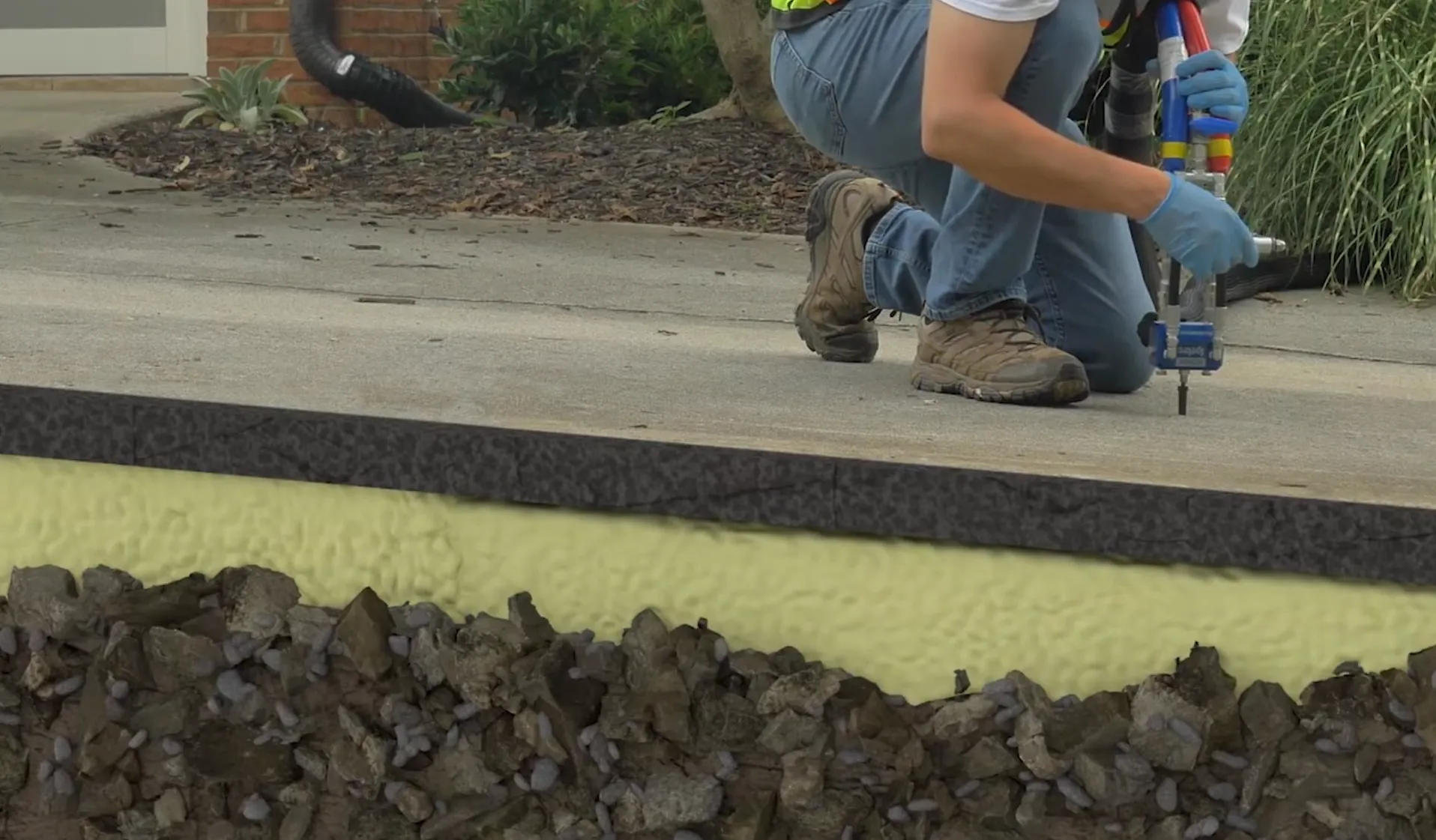
Poly Jacking (also referred to as Polyurethane Concrete Lifting or Foam Jacking), is a slab lifting process based on a two part expanding foam. Small holes are drilled into the concrete. The foam is then inserted into the hole and both parts of the foam react and expand. As the foam expands, it fills the empty space beneath the concrete. In addition, it solidifies any weak soils beneath the slab and forces it back up to grade. The curing time of this product takes approximately 15 to 30 minutes. This is why polyjacking is considered to be one of the quickest and most reliable slab lifting processes in Pocatello..
Over the few decades, Polyjacking has become a popular replacement to older forms of slab lifting such as mudjacking. While both techniques provide similar results; they differ greatly in terms of materials, weight, speed, hole size, and more.
Step-by-Step Process of Polyjacking
1
Inspection: We assess the area of concern. Check for any voids under the slab. And confirm if Polyjacking would be suitable for your situation. A written estimate will be provided prior to commencing any work.
2
Drilling: Access holes will need to be made from the top of the slab. These holes are much smaller than what's needed for mudjacking. Therefore, these holes will be less noticeable once patched.
3
Foam injection: The two part polyurethane solution will be injected into each hole. Once the two parts meet under the slab, they react and expand. The reaction creates enough pressure to fill the voids located directly underneath the slab and raise it upward.
4
Precision lift: The slab will rise with the growth of the foam. We continually check our progress to ensure we reach the desired height and maintain even transitions with adjacent slabs.
5
Patch and clean up: Each of the access holes will be filled with a color matching patch. The foam should be fully cured within 15 to 30 minutes. Immediately after completion, you may walk on the area. Vehicles may enter the property within approximately an hour.
What Key Differences Make Polyurethane Foam Different?
Cure Time
Polyurethane foam works to its full capacity within 15-30 minutes of application. Mudjacking will have you waiting 2-6 hours (depending on the weather) until the slurry can support traffic load. When speed of repair is a factor and there is foot or vehicle traffic through the area being repaired (for example: commercial entrances), this rapid cure time cannot be underestimated.
Hole Size
The size of the hole required to inject polyurethane foam is approximately 5/8", versus 1.5" for mudjacking. A smaller hole means less damage to the surrounding surface finish, and a cleaner final appearance.
Longevity and Durability
Polyurethane closed cell foam is chemically inert; therefore, it will not deteriorate due to exposure to water, mud, etc., or wear off. Polyurethane foam is far lighter than mudjacking slurry, so it can provide additional support under high load-bearing areas.
Polyjacking vs. Mudjacking: Side by Side
Factor
Polyjacking
Mudjacking
Material
Expanding polyurethane foam
Cement-soil-water slurry
Drill hole size
~5/8 inch
~1.5 inches
Cure / return to use
15 to 30 minutes
2 to 8 hours
Material weight
Very lightweight
Dense, adds load
Water resistance
High (closed-cell foam)
Moderate
Cost per sq ft
Higher
Lower
Best for
Interior slabs, decorative concrete, tight access
Driveways, large outdoor slabs
Frequently Asked Questions About Polyjacking
Polyurethane foam has been shown to remain chemically inert and doesn't break down over time. Therefore, when the original problem (settlement) is corrected, the polyjacking solution generally remains stable for 10+ years. Due to its chemical nature, the foam will not decompress due to applied loads, nor will it wash away from rainwater or flood waters.
When the foam cures, it becomes completely inert, meaning that it will not migrate or leach into surrounding soils. As such, it is safe to apply this material near foundations and plantings. If desired, we can share safety data for review.
Yes. A garage floor is one of our most common applications. With a rapid curing process, you can typically drive onto your newly repaired slab later in the day. Additionally, the low density of the foam makes it ideal for interior slabs where added weight would be undesirable to the sub-grade.
Our complimentary estimate will give you our recommendation. We will assess the type of settlement occurring, discuss your needs regarding cost and timeline and recommend the best option based upon those factors.
In most cases, the small hole patches will clean up and almost completely disappear over time. After about one year of exposure to the elements on a standard "broom finish" concrete surface, it may not even be noticeable that there was ever an issue. If the area has been decorative or finished/stained in some way, then we make sure to use matching materials to the best of our abilities.
Get a Free Polyjacking Estimate
Pocatello's local polyurethane concrete lifting team. No obligation, no pressure.