What Is Polyjacking?
Polyjacking, also called polyurethane foam lifting or foam jacking, is a concrete leveling method that uses a two-component expanding polyurethane foam to lift and stabilize sunken or uneven slabs. Small holes are drilled through the concrete, and the foam is injected beneath the slab. As the two components react, the foam expands, fills the void, and raises the concrete back to the correct position. The material cures within minutes, making polyjacking one of the fastest concrete repair options available.
Polyjacking has grown in popularity over the past decade as an alternative to traditional mudjacking. Both methods accomplish the same goal of lifting settled concrete, but they use different materials and suit different situations. Understanding what sets polyjacking apart can help you make an informed decision when getting an estimate.
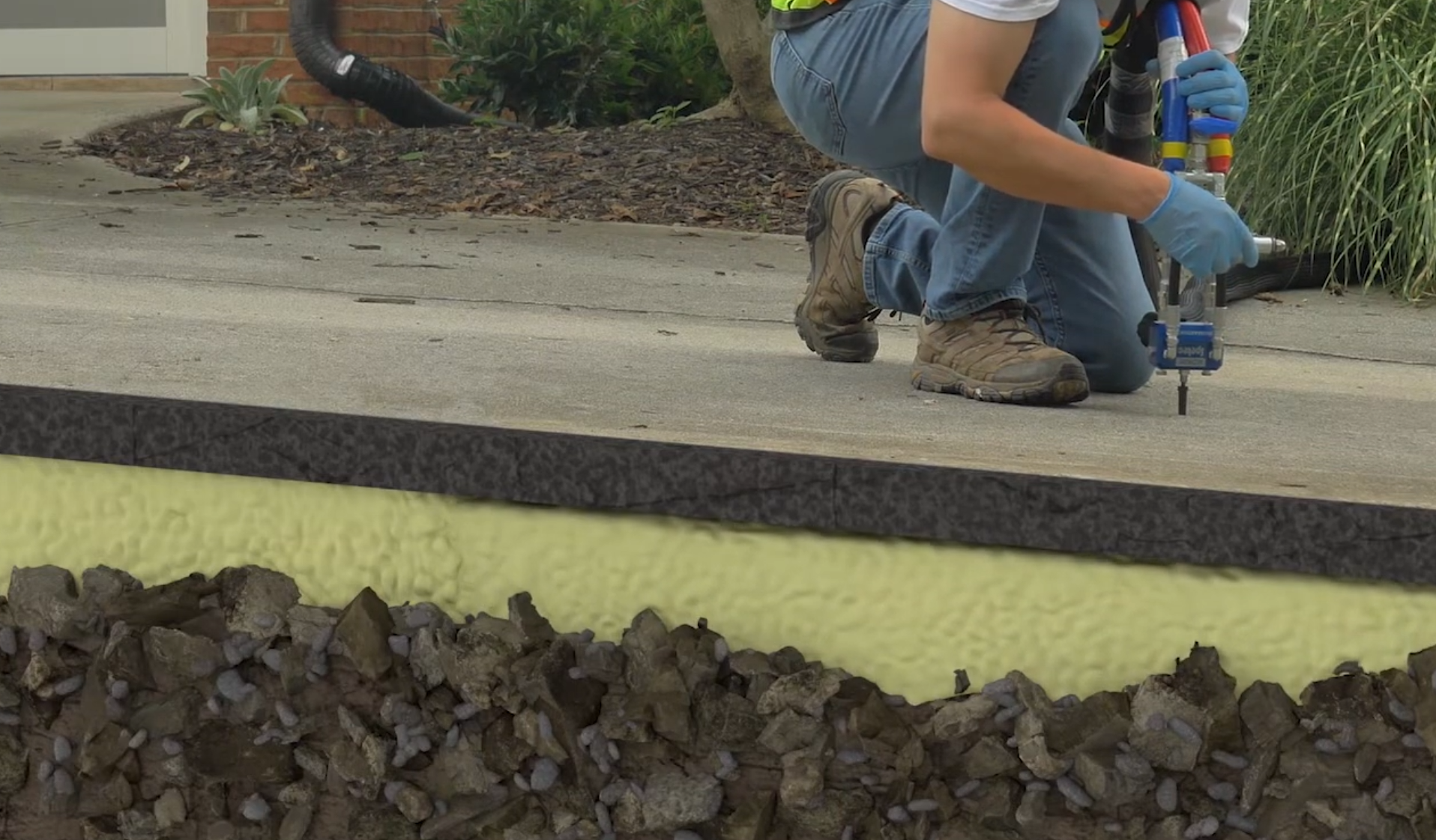
How Polyjacking Works: Step by Step
The polyjacking process is clean, precise, and significantly faster than full concrete replacement. Here is what to expect from start to finish:
What Makes Polyurethane Foam Different
The key distinction between polyjacking and traditional mudjacking is the material used beneath the slab. Each has its own set of characteristics that make it better suited to certain applications.
The Material Itself
Polyurethane foam is a lightweight, closed-cell material. Once it expands and cures, it is rigid, water-resistant, and does not absorb moisture. It adds very little weight to the subgrade, which can be an advantage in situations where the soil is already compromised or where load-bearing capacity is a concern. Mudjacking slurry, by contrast, is a dense cement-based mixture that adds significant mass beneath the slab, which some situations call for and others do not.
Cure Time
This is where polyjacking has a clear practical advantage. The foam reaches working strength in 15 to 30 minutes. Mudjacking material typically requires several hours before the area can be driven on. For high-traffic areas, commercial entryways, or situations where access needs to be restored quickly, polyjacking's fast cure is a meaningful benefit.
Drill Hole Size
Polyjacking uses holes of approximately 5/8 of an inch, compared to the 1.5-inch holes required for mudjacking slurry. Smaller holes mean less visible patching, which matters on decorative concrete, stamped surfaces, or any slab where appearance is important.
Longevity and Stability
Polyurethane foam is inert and does not wash away or break down in the presence of water, which is a common failure mode for poorly mixed mudjacking material. However, properly mixed mudjacking slurry has a long track record of durability and in many cases provides a denser, heavier base that is well suited to high-load applications like driveways and commercial slabs.
When Polyjacking Is a Good Fit
Polyjacking is not a universal solution, but it is the right tool for specific situations. Here are the circumstances where we typically recommend considering polyurethane foam lifting:
- Interior slabs: Basement floors, warehouse floors, and interior commercial slabs are well suited to polyjacking. The fast cure time minimizes operational downtime, and the lightweight foam adds no meaningful load to the structure.
- High-traffic commercial areas: Entryways, loading docks, and walkways that cannot be closed for extended periods benefit from polyjacking's rapid return-to-service time.
- Decorative or finished concrete: When drill hole visibility matters, such as on stamped, stained, or exposed aggregate concrete, the smaller holes from polyjacking are preferable.
- Areas with limited equipment access: Polyjacking equipment is generally more compact than mudjacking rigs, making it easier to work in tight spaces, around landscaping, or in areas with restricted access.
- Situations with moisture concerns: Because cured polyurethane foam is water-resistant and will not erode under the slab, it can be a good choice in areas prone to persistent water infiltration, provided the drainage issue is also addressed.
When Mudjacking May Be the Better Choice
We offer both polyjacking and mudjacking because no single method is right for every job. Mudjacking may be the stronger choice when:
- The project involves large residential or commercial driveways where the weight and density of the slurry provides a stable, proven base
- Budget is the primary concern, as mudjacking materials typically cost less per square foot than polyurethane foam
- The settled area is very large and requires significant void fill, where mudjacking slurry is generally more economical at volume
- The application is a standard outdoor residential slab where cure time is not a critical factor
During your free estimate, we will assess your specific slab, explain which method we believe is the better fit, and give you honest pricing for both if applicable. You make the final call.
Polyjacking vs. Mudjacking: Side by Side
| Factor | Polyjacking | Mudjacking |
|---|---|---|
| Material | Expanding polyurethane foam | Cement-soil-water slurry |
| Drill hole size | ~5/8 inch | ~1.5 inches |
| Cure / return to use | 15 to 30 minutes | 2 to 8 hours |
| Material weight | Very lightweight | Dense, adds load |
| Water resistance | High (closed-cell foam) | Moderate (depends on mix) |
| Cost per sq ft | Higher | Lower |
| Best for | Interior slabs, high-traffic areas, decorative concrete, tight access | Driveways, large outdoor slabs, cost-sensitive projects |