Concrete Driveway Leveling
One of the most common types of work that we see here in Pocatello is a sunken driveway. This can occur in various forms including; a single panel (or more) just above the garage door dropping, causing your vehicle to bounce every time you enter or exit the property. This can also allow rain to flow directly to your garage. The majority of sunken driveways can be repaired simply by adjusting the levels of the existing slabs.
We provide leveling services for driveway pads that have sunk due to poor soils aor shifting soil conditions, to provide a smooth transition and to restore proper drainage. We also perform pad leveling for AC units, hot tubs, shed slabs, and more. Many of the jobs we complete are completed in hours instead of days.
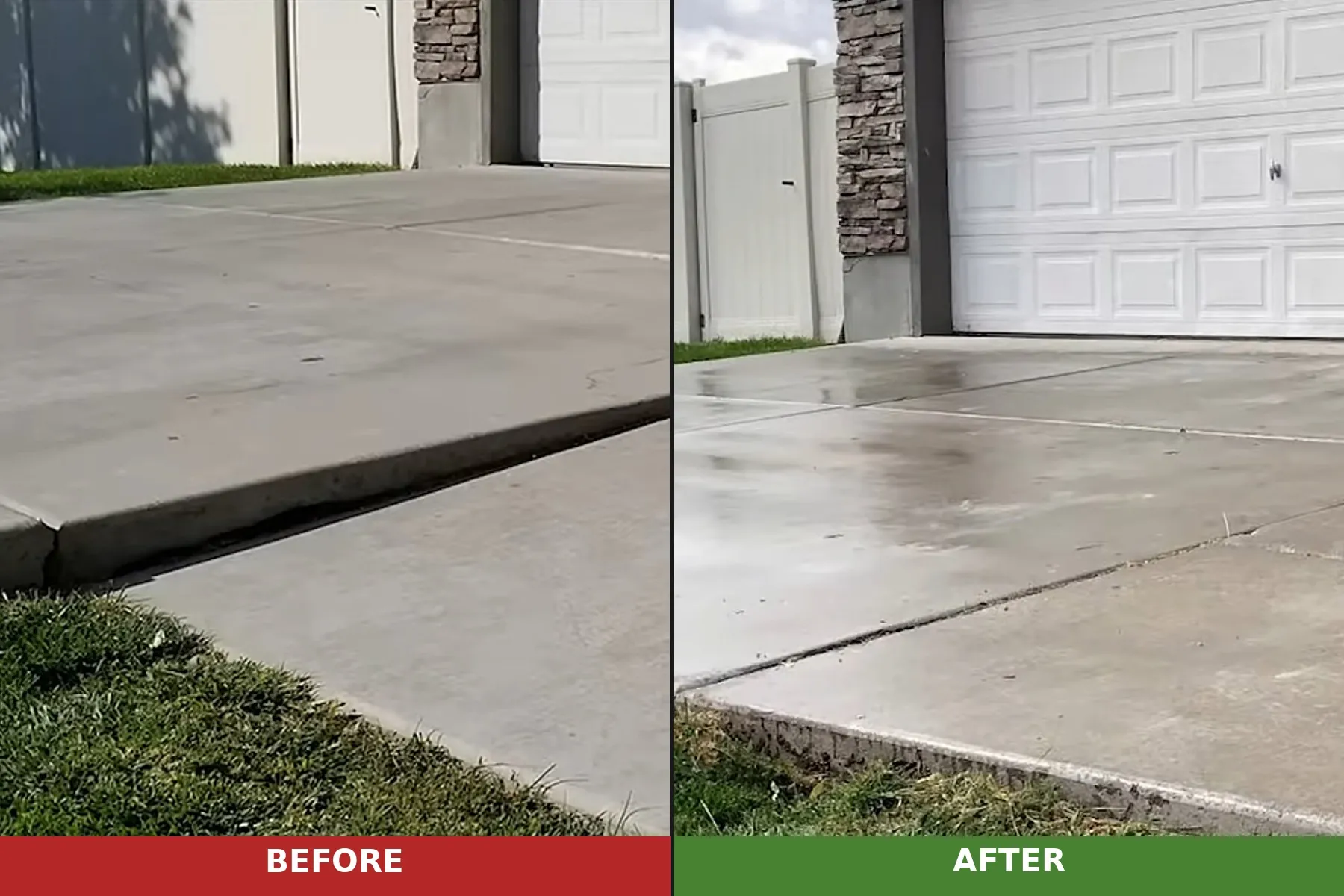
Common Driveway Problems We Can Fix
- Sunken panel near the garage door: This is one of the top problem we solve. At least one or all panels near the garage have dropped, resulting in a noticeable bump every time you pull in/out.
- Driveway apron settlement: This occurs when the section of driveway that intersects with the street settles on its own, resulting in an abrupt drop from curb to sidewalk.
- Pooling water: Uneven settlement creates areas where water will drain differently than before, which may direct water towards your garage or your homes foundation.
- Low spots mid-driveway: This could occur from excessive soil compaction or voids below the surface of the driveway, thus creating low spots in the driveway. These low spots are prone to collecting water and accelerating freeze-thaw damage each winter.
- Separated panel joints: When one panel sinks significantly below another panel, they separate at their seam. Lifting brings them back together to provide a smooth, even surface.
Why Not Replace the Entire Driveway?
Replacing is costly. Typical cost to replace a 2-car driveway is anywhere from $4,000 to $10,000 or more depending upon the size of your driveway, accessibility, and removal costs. Nobody ever talks about the fact that unless you fix the underlying problem(s), the replacement pour will likely sink similarly to the old pour.
Lifting addresses the root causes of sinking by filling voids and strengthening unstable soils beneath the slab while retaining the concrete you've already invested in. For most homeowners, this option provides a much wiser investment.
When Replacement is the Right Call
While we provide honest assessments for homeowners, there are instances where a brand-new pour is truly the best choice, such as:
- The slab is cracking severely, crumbling, or spalling
- The concrete has broken into numerous sections and cannot be raised as a singular piece
- The initial pour was too shallow for the weight-bearing needs of your driveway
If your driveway falls into one of these categories, we will let you know upfront instead of selling you a lifting project that will fail.
The Garage Door Apron Problem
The most problematic area on a Pocatello driveway is generally located at the panels adjacent to the garage door. Why? The garage floor and driveway slabs were placed at different times. The garage floor is supported by your home's foundation whereas your driveway slab is placed atop compacted dirt. Once that dirt settles or washes away, your driveway drops and your garage floor remains stationary. As a result, you get a classic "threshold" bump. Over time this will chew away at your garage door bottom rubber gasket.
We're experts at leveling these dropped sections to match the height of your garage floor. Most of these repairs are done with precision to ensure that they are level enough that you can drive onto the newly leveled portion of your driveway later that same day. This provides both you and your vehicle a smooth, safe transition.
How Long Does the Job Take?
For most residential properties we finish leveling the driveway in approximately 2-4 hours. While larger driveways that have multiple areas needing to be adjusted may require a full day. In addition to saving you money and hassle; you should be able to safely drive on the newly leveled section of your driveway right afterward. That's a huge difference compared to having to wait 7-14 days for a fresh pour to fully cure.