Mon–Fri 9am–6pm, Sat 9am–2pm  |  (208) 852-8975

Pocatello's Concrete Leveling & Concrete Lifting Specialists

Tired of your uneven driveway, sidewalk, or garage apron? Worried about catching your toe on an uneven slab? We bring concrete back where it belongs without the cost and headache of a fresh pour, and at a fraction of the cost. Local mudjacking, polyjacking, and settled slab repair, done in Pocatello.

Free Estimates  |  Locally Owned  |  Same-Week Service

Before and after concrete leveling in Pocatello, ID - sunken driveway raised and leveled flush with garage floor

Our comprehensive Concrete Lifting Services


If your concrete has settled little by little or all of a sudden, our lifting process and expertise can help you level it back to it's original state. Leaving it look like it never moved at all. Every project is handled by folks who live in Pocatello.

Why Concrete Sinks in Pocatello


When concrete tilts or drops, the instinct is to blame the concrete or the person who poured it. The more likely answer is the soil underneath. A few conditions explain why concrete in our area of Idaho tends to shift and settle:

Freeze and thaw cycles. Water creeps beneath a slab, and then freezes in winter. This cycle repeats itself slowly pushing the soil downward. Spring brings in the thaw, the soil contracts, and gap grows and so the cement settles. Repeat this pattern across a few years and even well-poured concrete will become uneven.

Irrigation runoff and quick snowmelt. Watering your lawn all summer and repeated spring melt push more water through our soils than the subgrade was built to drain. Fine dirt wash out from under the concrete and the compacted base loses its original height.

Loose fill and old trenches. Many Pocatello lots were graded with fill before any pouring happened, and most yards have water, sewer, gas, or power lines that have been buried and reburied over the years. Both situations can cause issues that create uneven cement. Creating droopy driveway aprons and sidewalks along areas that need to be leveled.

Mature tree roots. Cottonwoods, maples, and ash near older streets push concrete upward as they grow and leave hollow spots once a tree comes down. Both produces an uneven surface.

In nearly every case, the slab is still sound. Lifting or leveling fixes the actual problem by filling the empty space below and restoring proper support.
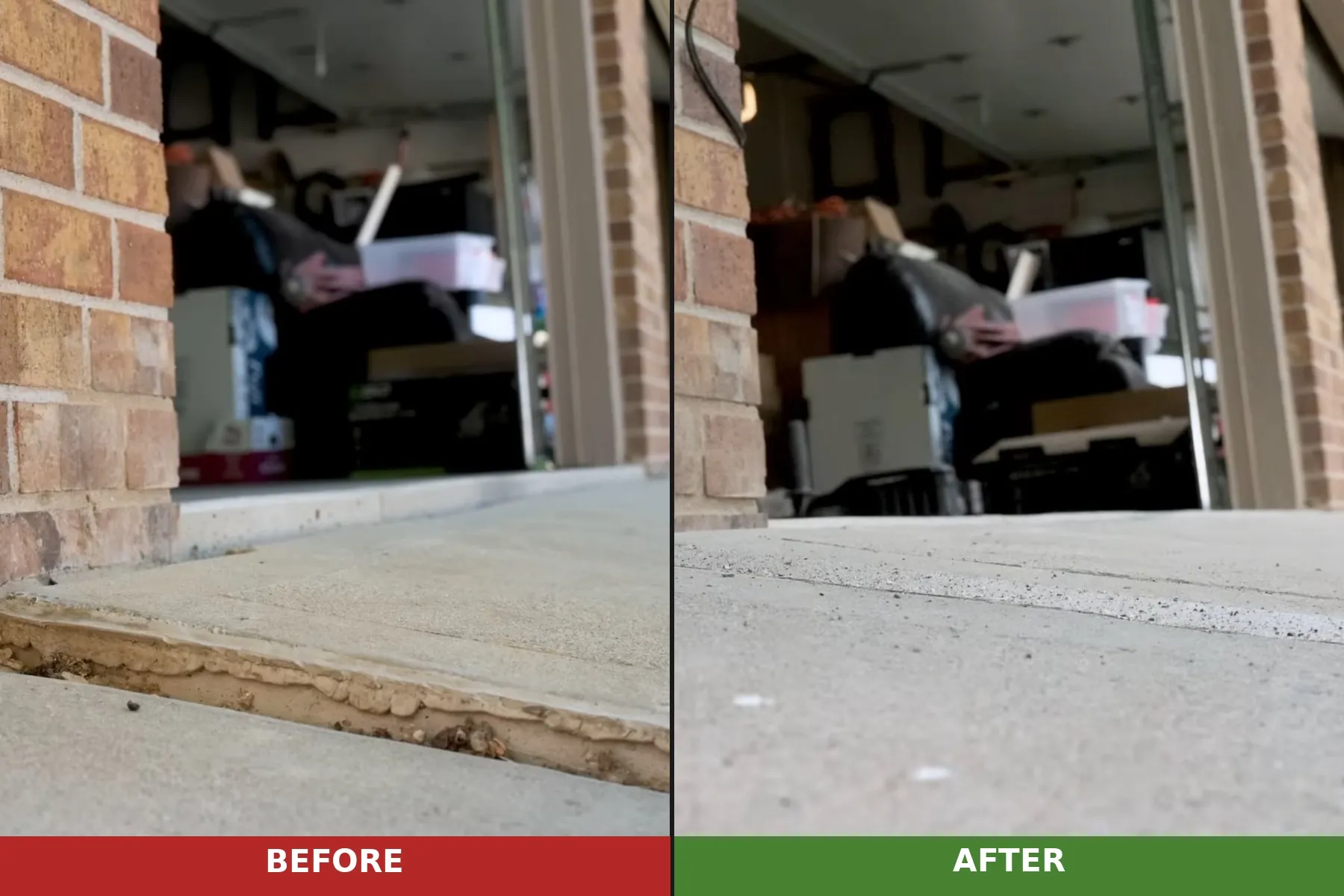
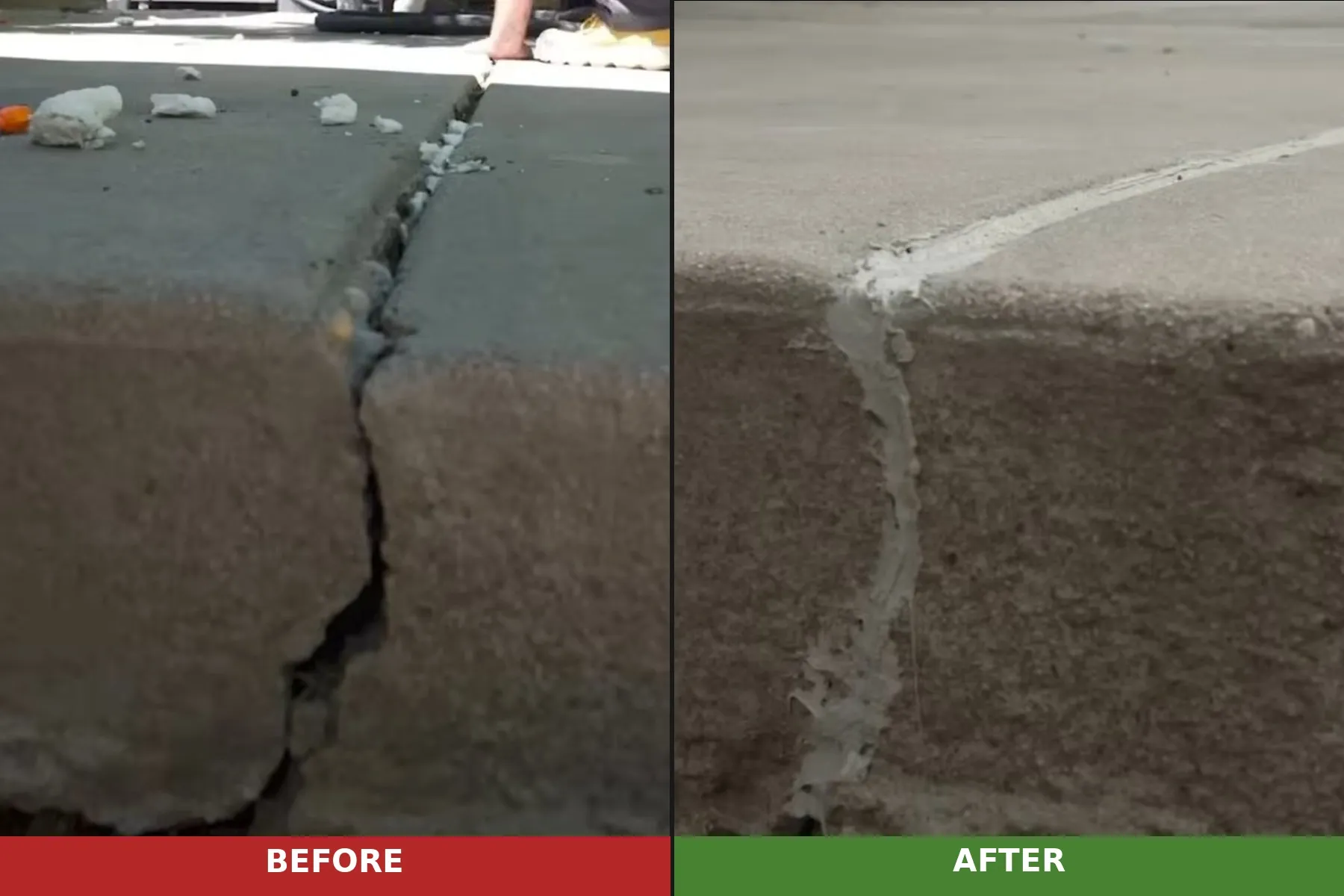
Signs Your Concrete Needs Leveling


Settlement in driveways occurs over time, therefore; many homeowners do not recognize it as an issue until there is a significant gap. Some of the signs of settlement include:

Visible Clues

  • Concrete slabs with different levels (higher/lower) than adjacent slabs
  • Increasing gaps between adjacent slabs during each seasonal cycle
  • Driveway panels have separated from the garage threshold
  • Cracks extending diagonally from a corner of a slab

Water Behavior

  • Standing puddles on your driveway or patio after rain
  • Rainwater runs towards the garage or foundation rather than moving away
  • Wet soil or mud washs out under a slab where it did not before
  • Water leaking out from under a panel

Feel and Function

  • A "thud" under your tire at a certain point
  • Your tires feel like they are flexing/rocking when walking/driving on the slab
  • Garage door seals now contact the floor at only at a few points
  • Trip hazards along sidewalks/steps due to uneven slab surfaces

All of these items should be evaluated. Once concrete has settled, it will rarely fix itself and if left uncorrected, large voids will require additional materials to repair.

Mudjacking vs Polyjacking


These two methods handle nearly every lifting need locally. The process for both starts with drilling small holes through the concrete and then we pump material underneath. The difference is what gets pumped:

Mudjacking

Also called slabjacking or concrete raising, mudjacking pumps a dense cement mixture underneath your slab. Pressure builds from placing our slurry under the cement, making the cement panel rise. The method dates to the early 1900s and remains the most budget-friendly route. The mix does take a few hours to cure before heavy loads can be placed on it, and requires larger holes to be drilled.

Learn About Mudjacking →

Polyjacking

Polyjacking injects a two-part polyurethane foam that expands and hardens under the concrete slab. It expands into all pockets, and raises the concrete. It takes around 15 to 30 minutes to cure. It requires smaller holes than mudjacking, and the cured foam adds almost no weight. It costs a little more than mudjacking, but is worth it for longevity, heavy loads, and fast turnaround.

Learn About Polyjacking →

Not sure which fits your project? We walk you through both at time of estimate.

What Does Concrete Leveling Cost in Pocatello?


Price is the first thing most homeowners ask. The honest answer depends on the area's size, how far the slab dropped, and how easily we can reach it. Realistic ranges for projects we see most often: Pricing is an important factor, and we like to be as upfront as possible so you know what to expect. There are quite a few factors including the size of the job (area), how far the slab has dropped and if the damaged area is easy to access. We've outlined some general prices of what we commonly work with:

Project Type Typical Price Range
Single sidewalk panel (4x4 or 4x6 ft) $250 to $650
3 to 5 sidewalk panels $350 to $850
Driveway apron or 1 to 2 panels near garage $400 to $800
Full driveway (multiple slabs) $700 to $2,500+
Patio leveling $400 to $1,200
Sport court leveling (tennis, pickleball, basketball) $700 to $2,000+
Pad leveling (AC unit, hot tub, shed) $200 to $500

For context, fresh concrete in Pocatello generally runs $6 to $12 per square foot once you fold in demolition, hauling, forming, and a new pour. A 200 square foot concrete driveway section we could lift instead for $400 to $800 could easily run much higher to tear out and repour. The same lifting approach works well for sport court owners fixing low spots on a tennis, pickleball, or basketball pad without ripping it out. For a brand new sport court build, talk to a dedicated court builder.

Lift or Replace: Making the Right Call


Not every slab is worth lifting. As part of our free estimate, we give you a "yes" or "no" on whether to lift your slab. The quick decision framework is:

Lift when:

  • The slab has dropped, but is still intact and without large amounts of structural cracking
  • Settlement is under approximately 4-6"
  • The surface exhibits typical weathering with just minor cosmetic cracking

A new pour may be best when:

  • The slab is breaking down (spalling), has cracked into multiple sections
  • There is an active underground problem (i.e. - broken pipe) that requires digging anyway
  • If the original pour was made too thin to support current loads

We'll let you know if a fresh pour is right for you, and when replacement turns out to be the better call we can point you toward a trusted concrete contractor. Homeowners who are considering this area often consider asphalt paving as a possible alternative surface material.

How Concrete Leveling Works


A fast, clean and a very environmentally friendly repair solution. This would A typical job:

1
Free Walkthrough

Measurements are taken on the slab; we identify the cause of the settlement and provide you with an estimate. No pressure to book – nothing to lose.

2
Access Holes

We drill a few small access holes into the panel. We choose the placement to give us the right amount of control as we raise the slab.

3
The Lift

We pump material under the slab. When all voids have been filled and the pressure has built up inside the slab it begins to rise smoothly back to grade.

4
Patch and Wrap

Patch access holes, clean-up site, and put the concrete back into use. Most jobs allow foot traffic that same day.

Choosing a Concrete Leveling Contractor


Not every concrete leveling company provides the same quality of work. When you compare concrete leveling companies in Pocatello, or shop for concrete leveling in other cities, the same simple question list provides an abundance of information about your options:

Questions worth asking:

  • Are you licensed & insured within the state of Idaho? Can I see some documentation proving this?
  • Will your estimate provide written terms prior to beginning work?
  • How many years has your crew(s) been working in Pocatello?
  • What type of slurry or foam do you use in Pocatello's winter conditions?
  • What kind of warranty will back your work?

Red flags:

  • Estimates provided orally; or estimates with no clear pricing
  • Pressure to commit on the spot
  • Recommendations to remove and replace concrete that can be lifted
  • Recommendations to lift cement that is clearly beyond repair
  • Hesitation when you ask to see their Idaho insurance documents

If a contractor provides you with simple, straightforward answers regarding all of these issues should be included on your short-list. These same criteria apply regardless if you are comparing concrete services for a small residential driveway in Pocatello, or a large commercial project in a major metropolitan area.

Why Pocatello Homeowners Choose Us


Our company is a local operation. Each job is important to us, therefore we understand how soils react in the region of Pocatello, Idaho as well as what products will withstand year after year.

  • Real cost savings. The average cost for lifting will be 50-70% less than a replacement.
  • Immediate results. Most jobs will take approximately 2 to 4 hours to finish.
  • Locally owned. Many of your neighbors have hired us for their needs.
  • Licensed and insured. We provide general liability insurance on each project.
  • Free written quotes. A total estimate prior to any drilling or concrete lifting.
Before and after concrete leveling in Pocatello ID - settled slab raised back to level

“I could see a portion of my patio sinking into the ground a little bit after all the rain that we had in this past few seasons and I could see where the area would collect puddles with every storm. I called up Quality Pocatello Concrete Leveling, and after they did the leveling and repairs on the patio, we immediately noticed a big difference! Now when there is a storm, the water will drain off the patio as normal and when you walk over it, it has a very solid feeling under your feet. They treated my landscaping with respect and they left everything clean when they finished. It’s great to be able to sit outside again and actually enjoy it without having to stare at the uneven concrete.”

Yvonne Monthe

“I can’t say enough good things about Quality Pocatello Concrete Leveling! From the first phone call to the moment they packed up, every single person was friendly and professional. They polyjacked our driveway and honestly, when they finished, you couldn’t even tell anyone had been out here—it looked that clean! The price was exactly what they quoted me too, which I really appreciated. It feels so good knowing the job was done right and done fast, and that they’d be there if I ever need them again. Thank you Quality Pocatello Concrete Leveling, you’ve got a customer for life!”

Gregory Alabaster

“Quality Pocatello Concrete Lifting is a great company to work with. They came in, did an outstanding job of raising my driveway back up to level. Their clean-up after they left was perfect. I could almost not tell they had even done work on my driveway. Their pricing was accurate from the quote they provided. They gave us a quote for the entire job and when it was all said and done, the total cost was the exact amount given in the original estimate. If you are looking for someone to raise your sunken or uneven concrete, I highly recommend Quality Pocatello Concrete Lifting.”

Madeline Paige

Concrete Leveling Across Pocatello, Idaho


We have been working throughout Pocatello, from downtown along the historic Portneuf River to new developments on the bench. Therefore, we have encountered similar ground conditions and frost in your neighborhood.

Frequently Asked Questions


Concrete leveling costs in Pocatello depend upon the amount of cement being lifted, how far down the slab has sunk, and accessibility to place equipment. For example, a small sidewalk panel usually runs $150-$350. A larger area near the garage can range $250-$650. Large areas such as a complete driveway may cost anywhere from $700-$2,500 or more. Most often this price is less than half of what it would be to replace the same concrete. Before any drilling begins, we give you a written quote based upon our estimate of your needs.
Generally speaking, they both provide a long-lasting solution when completed correctly and the root cause of the settlement is corrected. The primary reason for failure is water. If there is a problem with drainage causing excessive moisture to collect under the slab, then most likely the leveling process will fail again. On properties with a slope, holding back soil and steering runoff away from the slab can make a big difference, which is sometimes where regrading or a proper retaining wall installation comes into play. We will point these issues out during the estimate and let you know if it would be worthwhile to address the drainage issues simultaneously with the lift.
Mudjacking injects a cement-soil mixture (slurry) under a set slab to lift it back up. Polyjacking also lifts a set slab but uses a light weight two part polyurethane foam (curing in minutes), injected through smaller holes than mudjacking. Mudjacking is the cheaper option but has some downsides comparatively. Polyjacking leaves fewer "patches" and is lighter on the sub-grade; however, it is generally pricier. Both options will be considered during the estimate and we will make recommendations based on which method best suits your project.
For most residential jobs in the Pocatello area, concrete leveling is finished within 2-4 hours. Some jobs (e.g., just lifting one small sidewalk panel) may take under an hour while larger jobs (i.e., multiple settled panels in a large driveway) may require longer. Regardless, most customers choose lifting because it allows for same day completion. Replacement requires pouring new concrete and waiting at least a week or more until the concrete sets enough for traffic.
Yes, if there are surface cracks and/or edge cracks on your concrete, they do not necessarily mean that your concrete cannot be leveled. What's important is whether your entire slab remains intact after leveling. If so, it's probably a good candidate. However, if your concrete has broken into sections or is breaking apart, then it's probably time to contact a local licensed concrete contractor who specializes in laying new concrete.

Ready to Get Your Concrete Back to Level?

Give us a call or request a quote online. Written estimates are free, with no pressure and no commitment.

Call Now
