If you've ever caught a toe on a raised sidewalk panel, felt the thump of a sunken driveway slab, or watched water pool on your concrete after a storm, you are looking at concrete settlement. This short guide covers what causes it, how concrete lifting works, what the job tends to cost, and how to pick a contractor who will do it right.
1. Why Concrete Settles
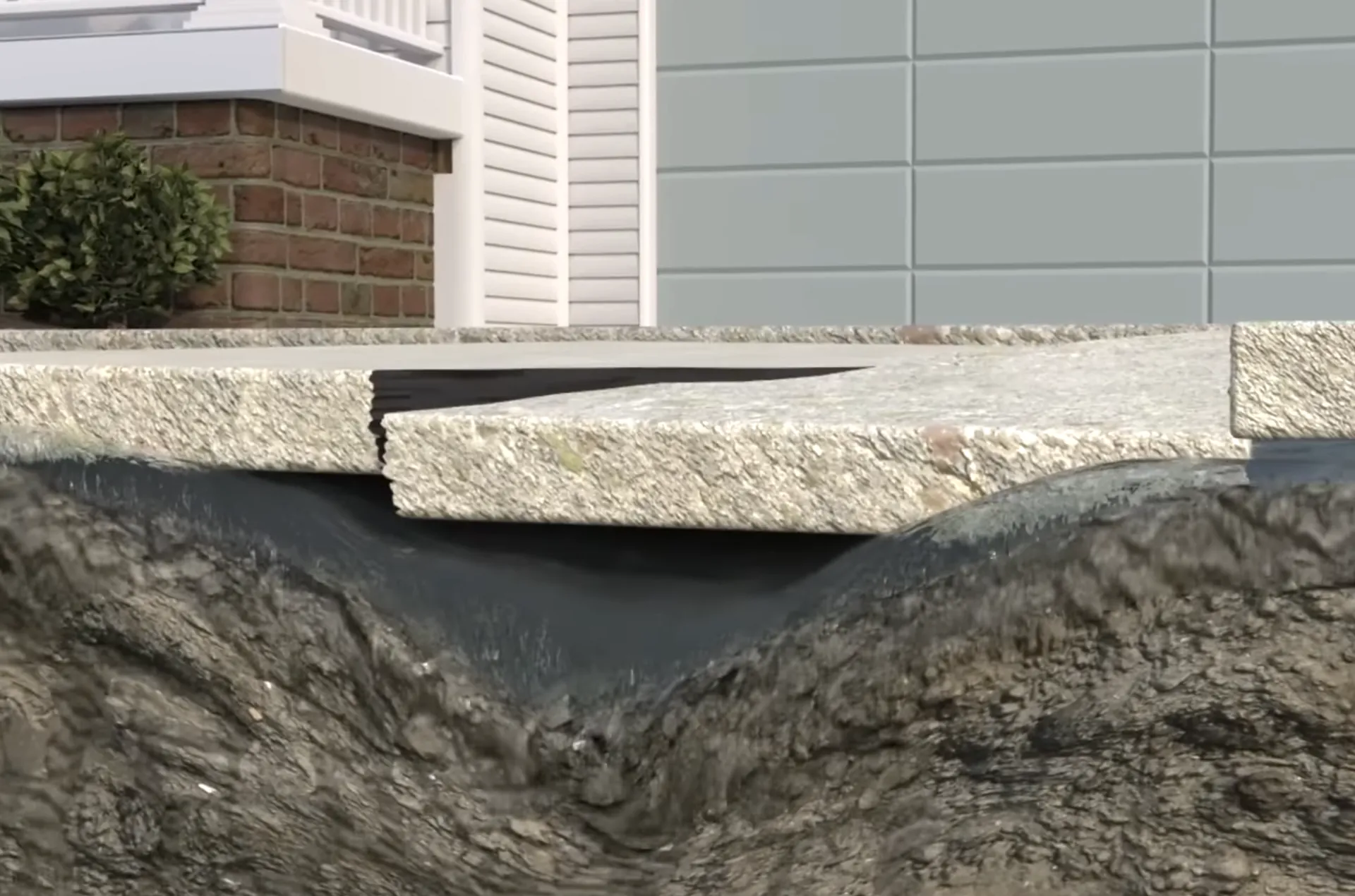
Slab settlement happens when the soil under the concrete shifts, compresses, or washes out. The slab loses its support and slowly drops. The key thing to understand is that the concrete itself is rarely the problem. The ground beneath it is. Lifting puts the panel back where it belongs and refills the missing support.
A few Pocatello-specific reasons it happens so often here:
- Freeze-thaw cycles. Moisture freezes and expands under slabs, then contracts again in spring. Repeat for decades and even good concrete starts to move.
- Irrigation runoff and snowmelt. Summer watering and rapid spring melt wash fine particles out from below the slab, softening the base.
- Loose fill and old utility trenches. Backfill that wasn't fully compacted continues settling for years, particularly along buried water, sewer, and gas lines.
- Tree roots. Roots lift slabs as they grow and leave hollow spots when a tree comes down or roots die back.
2. Warning Signs
Settlement creeps in slowly. The earlier you spot it, the easier (and cheaper) the fix. A few things worth watching for:
- A panel sitting noticeably higher or lower than the one beside it
- Widening gaps at the joints between slabs
- Daylight visible beneath the edge of a panel
- Water pooling on the driveway or patio after rain, or now draining toward the foundation
- A thump under the tires at a specific spot, or flex when you walk on the slab
- A garage door seal that no longer meets the floor
3. Lifting Methods
Two methods do almost all of the slab lifting around Pocatello. Both start the same way: small holes drilled through the panel, then material pumped underneath to fill voids and raise the concrete.
Mudjacking uses a dense slurry of soil, Portland cement, and water. The technique dates to the early 1900s and remains the most budget-friendly choice. Holes run about 1.5 inches across, and the mix needs a few hours to cure before vehicle traffic. It is a strong fit for driveways, sidewalks, and patios where the slab is structurally sound and cost matters.
Polyjacking uses an expanding two-part polyurethane foam. Cure runs 15 to 30 minutes, holes are only about 5/8 inch, and the cured foam is light and water-resistant. It costs two to three times more than mudjacking, but pays off in tight access spots and any project where speed matters most.
4. What It Costs in Pocatello
Pricing varies with slab size, how far it has dropped, and access. Realistic ranges for common projects:
| Project Type | Typical Pocatello Price Range |
|---|---|
| Single sidewalk panel (4x4 or 4x6 ft) | $150 to $350 |
| 3 to 5 sidewalk panels | $350 to $750 |
| Driveway apron (1 to 2 slabs) | $300 to $600 |
| Single driveway panel near garage | $250 to $500 |
| Full driveway (multiple slabs) | $600 to $1,500+ |
| Patio leveling | $400 to $1,200 |
| Garage floor section | $300 to $800 |
For comparison, a fresh pour in Pocatello typically runs $6 to $12 per square foot installed. A 300 square foot section that would cost $1,800 to $3,600 to replace might only be $500 to $900 to lift. Savings sit between 30 and 70 percent for most jobs.
5. Lift or Replace?
Not every slab is worth lifting. The quick framework we use:
Lifting is the right call when the slab has dropped but is still in one piece, the settlement is under about 4 to 6 inches, and the surface shows only normal wear and minor cracks.
A new pour makes more sense when the concrete has broken into pieces, is crumbling or spalling, the original pour was too thin for the load, or there is an active underground issue (like a broken pipe) that needs excavation anyway.
A straight-shooting contractor will tell you which bucket you are in, even if the answer is replacement.
6. Choosing a Contractor
Not every concrete leveling outfit delivers the same quality. A short checklist before you sign anything:
- Licensed and insured in Idaho, with proof available on request
- Written estimate before any work begins
- Real local experience in Pocatello specifically
- Clear answers about the slurry mix or foam product they use
- At least a one to two year warranty on the lifting work
- Verifiable local references
Red flags include verbal-only estimates, pressure to commit on the spot, vague answers about insurance, and any recommendation that doesn't match the obvious condition of your concrete.
7. After the Lift
A leveling job is durable, not magical. To get the most from it:
- For mudjacking, hold off vehicle traffic for 4 to 8 hours (we'll give a specific window). Foam lifting handles traffic almost immediately.
- The patched holes are visible at first and blend in over time as the surface weathers.
- Keep water away from your concrete. Aim downspouts off the slabs and seal any gaps along the slab edges.
- Reseal control joints and expansion joints every few years to keep water from finding the subgrade.
- If you spot a panel starting to drop again within a year or two, drainage or soil at that spot may need a closer look.
When the job is done properly and the underlying cause is addressed, a lifted slab in Pocatello typically holds for 8 to 15 years or longer.
Ready to Get Your Concrete Looked At?
We offer free, no-pressure written estimates anywhere in Pocatello, Idaho. Call or use the quick form. We usually respond within a business hour.